How to connect Decathlon with easySales: a complete setup guide
Connect Decathlon to easySales across fifteen storefronts: Shop ID and API key, the two-step form, logistic class and condition, offer defaults, sending offers and the product safety details every offer carries.
What connecting Decathlon gives you
Decathlon sells other brands' sports equipment alongside its own, and it does so through a separate storefront in each country it operates. Connecting it to easySales means your catalogue reaches those storefronts and their orders come back into the same list as everything else, ready for an invoice and an AWB.
Sixteen storefronts, one form
The connection form is the same everywhere; what changes is which storefront card you press Connect on. Fifteen are open to sellers today.
| Region | Storefronts |
|---|---|
| Central and Eastern Europe | Romania, Hungary, Czechia, Poland, Bulgaria |
| Western Europe | France, Germany, Italy, Spain, Portugal, Belgium, the Netherlands, Luxembourg |
| Rest | United Kingdom, Switzerland |
Each is its own connection with its own credentials, its own catalogue and its own prices. Connecting Romania does not connect Hungary.
Before you start
A Decathlon seller account on the storefront you are connecting.
Its Shop ID, from the home page of the Decathlon seller dashboard.
An API key, generated under My account → API Key in the same dashboard.
Products in easySales, either from a connected shop or from the Virtual Shop.
Step 1 — Find the Decathlon card
Go to Integrations → Marketplaces and search for decathlon.
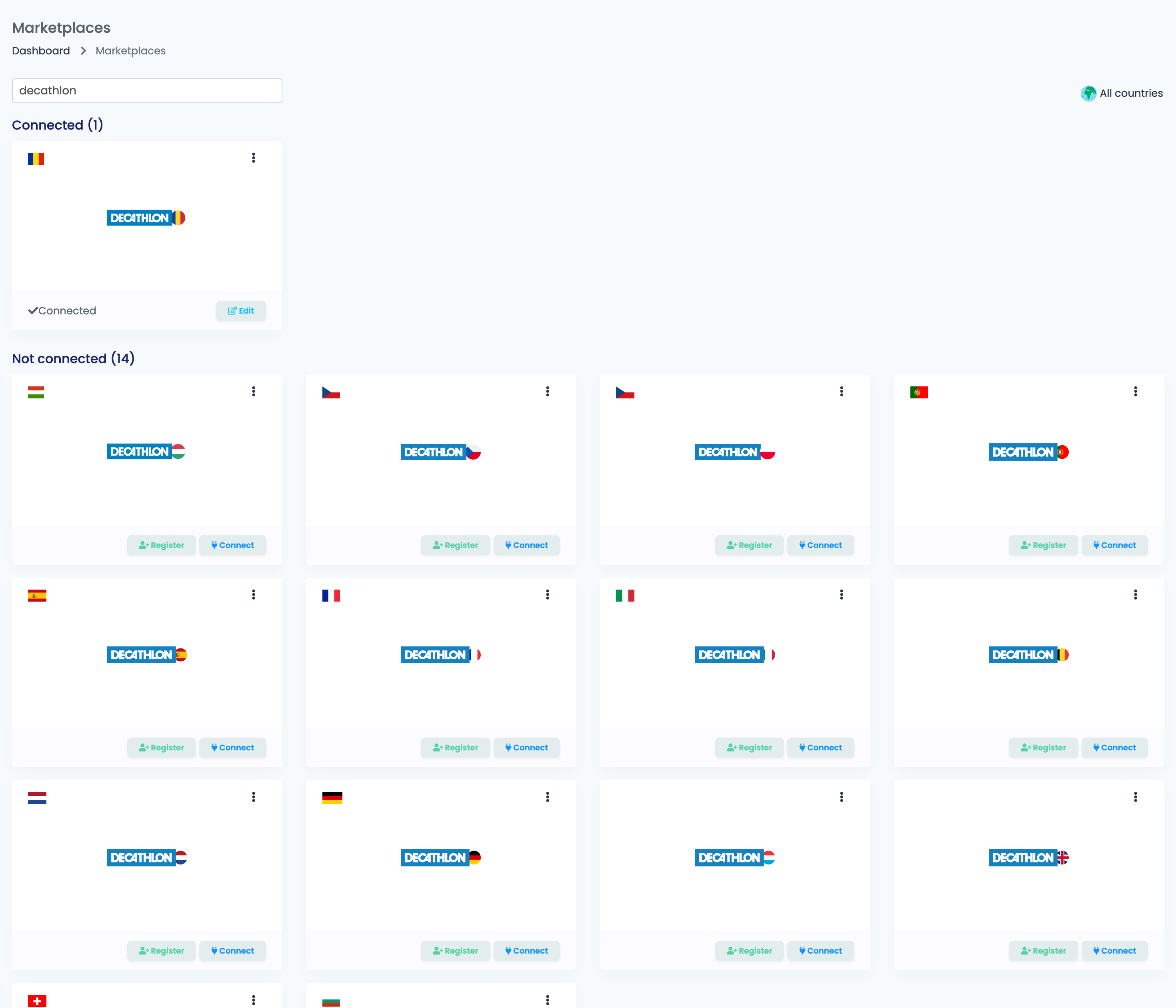
Press Connect on the storefront you sell on.
Step 2 — Identify the shop
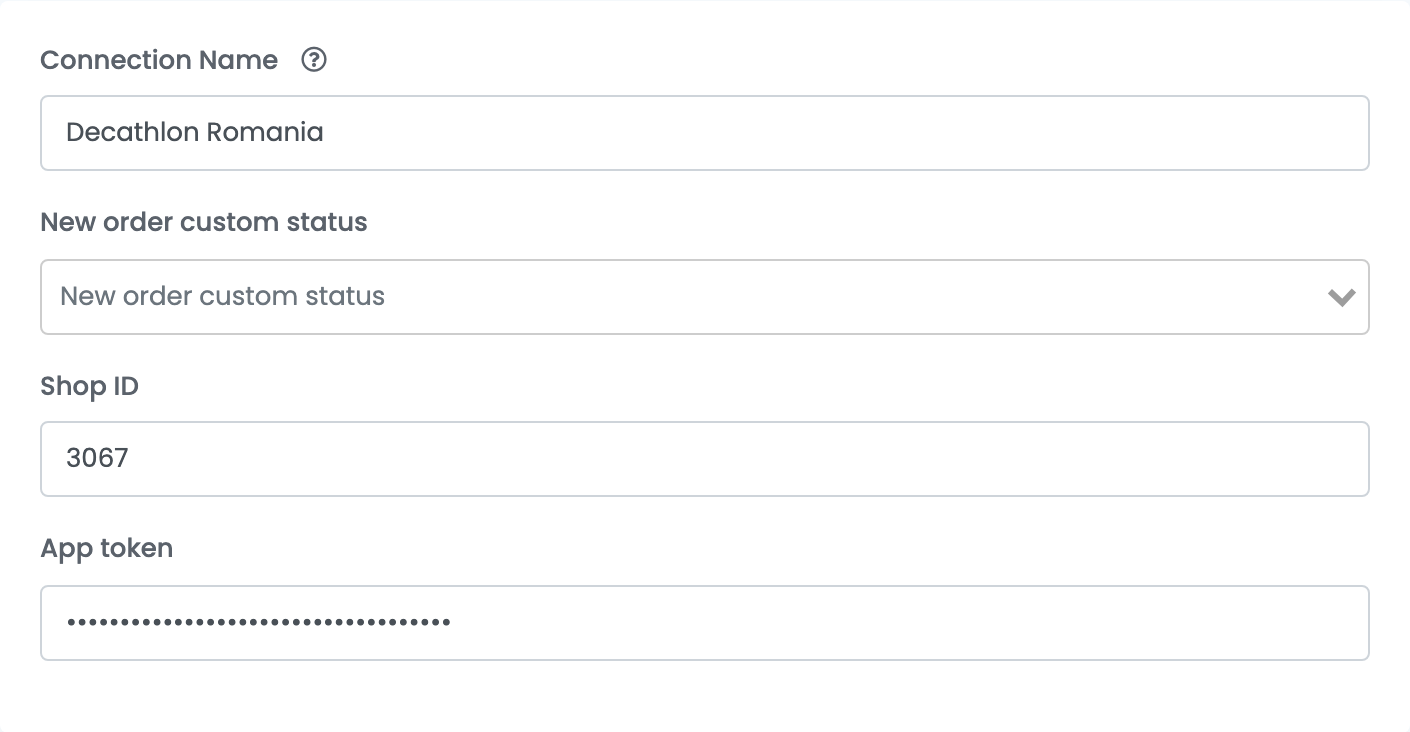
The form opens with four fields, and only these four. The rest of it does not exist yet.
| Field | What goes in it |
|---|---|
| Connection Name | What you will see inside easySales when you pick between connections. Name it after the storefront. |
| New order custom status | Optional. A status of your own that every order from this storefront starts in, if you sort orders that way. |
| Shop ID | The numeric id of your shop, shown on the home page of your Decathlon seller dashboard. |
| App token | Generated in your Decathlon account under My account → API Key. |
Then press Continue. easySales signs in to Decathlon with what you entered and asks it for two lists — the logistic classes and the offer conditions your shop is allowed to use. The rest of the form appears with those lists filled in.
Step 3 — The offer defaults
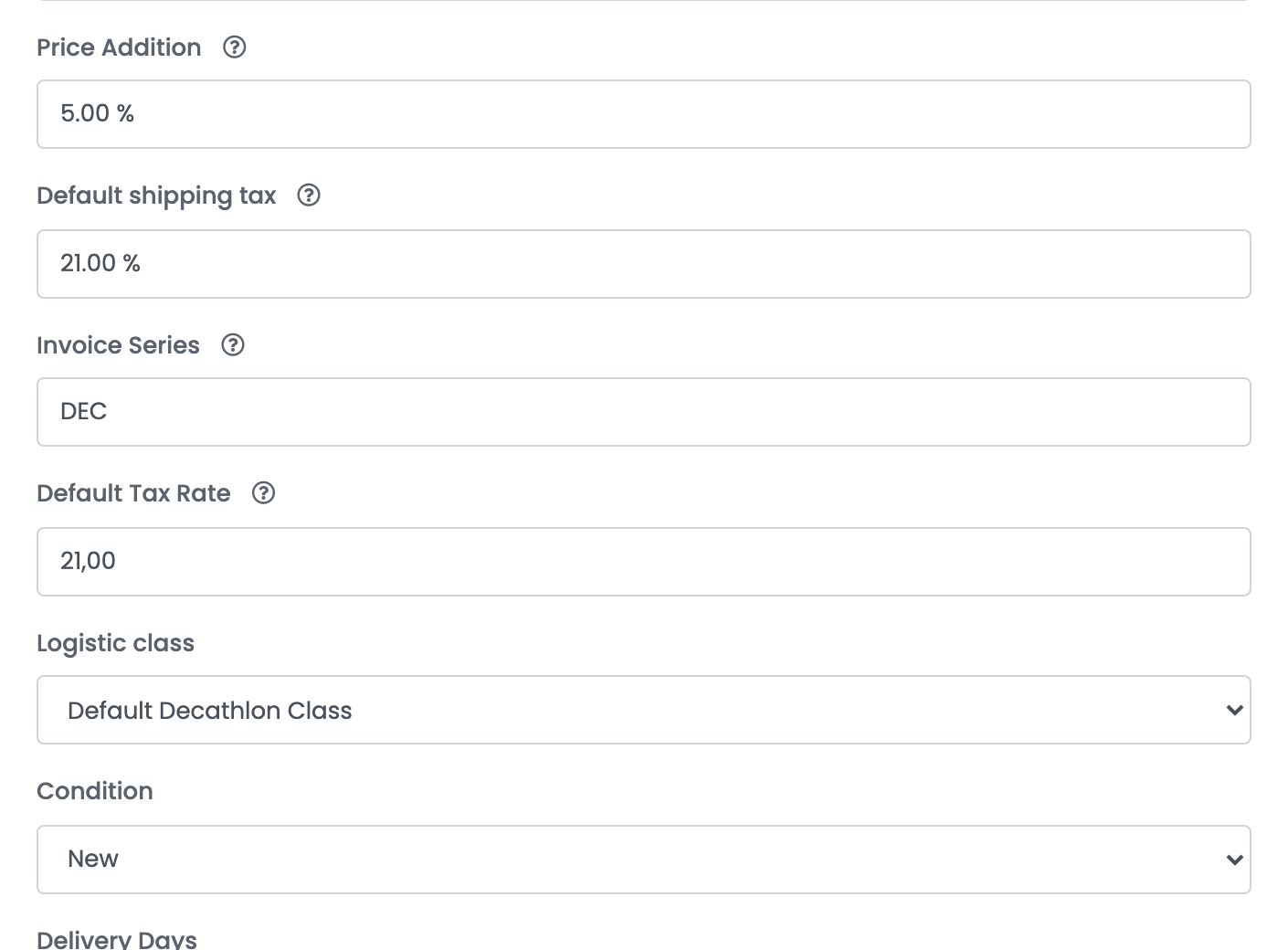
These four decide what a new offer looks like before you touch it.
| Field | What it does |
|---|---|
| Price Addition | A percentage added to the sale price on new offers only. At 10%, a product priced 100 goes to Decathlon at 110. It does not touch offers that already exist, and price rules you build later override it. |
| Default shipping tax | The VAT rate applied to the delivery charge on imported orders. |
| Invoice Series | The billing series orders from this storefront are invoiced on. |
| Default Tax Rate | The VAT rate used when an order arrives without one. |
Step 4 — Logistic class, condition and delivery time
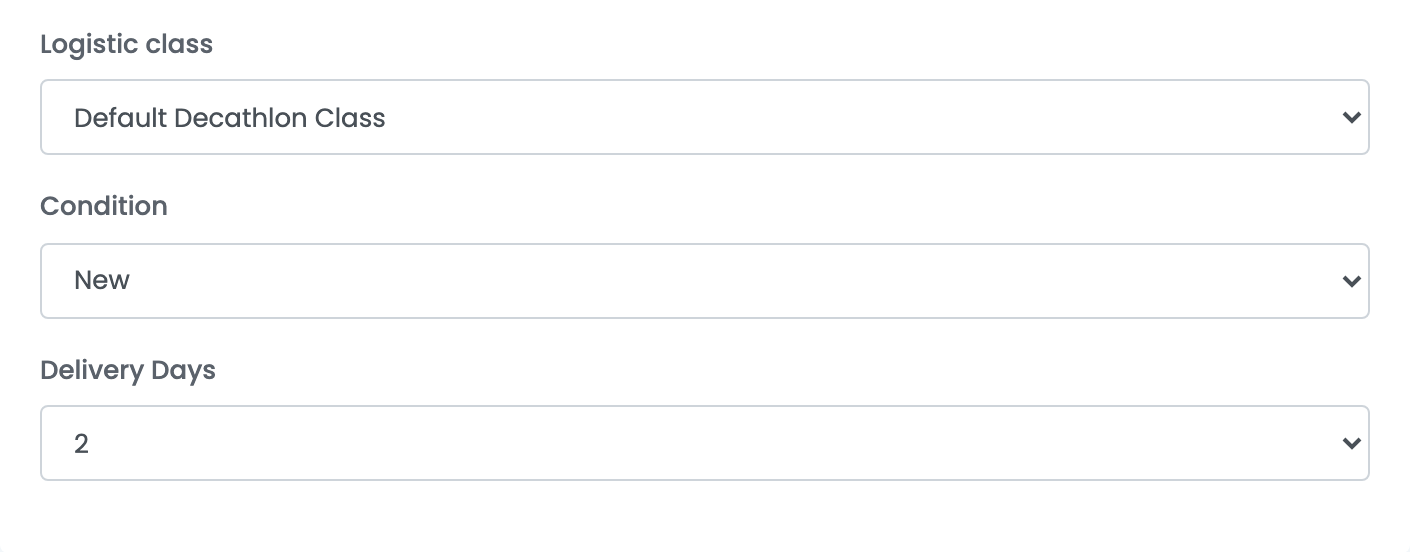
| Field | What it does |
|---|---|
| Logistic class | Decathlon's own shipping band for the offer — it decides what the buyer is charged for delivery. The list is your shop's; Default Decathlon Class is there if you have not set any of your own. |
| Condition | Whether the offer is listed as new, used or refurbished. The options come from Decathlon. |
| Delivery Days | How long you take to hand the parcel over, in days, shown to the buyer as the dispatch time. Choose from 0 to 10, or 15, 21, 27, 30, 45, 60 and 90. |
The options in the first two lists come from Decathlon, not from easySales — they are your shop's own, fetched when you pressed Continue. Press Save when you are done.
Step 5 — What gets sent, and when
Open Additional settings at the top of the form.
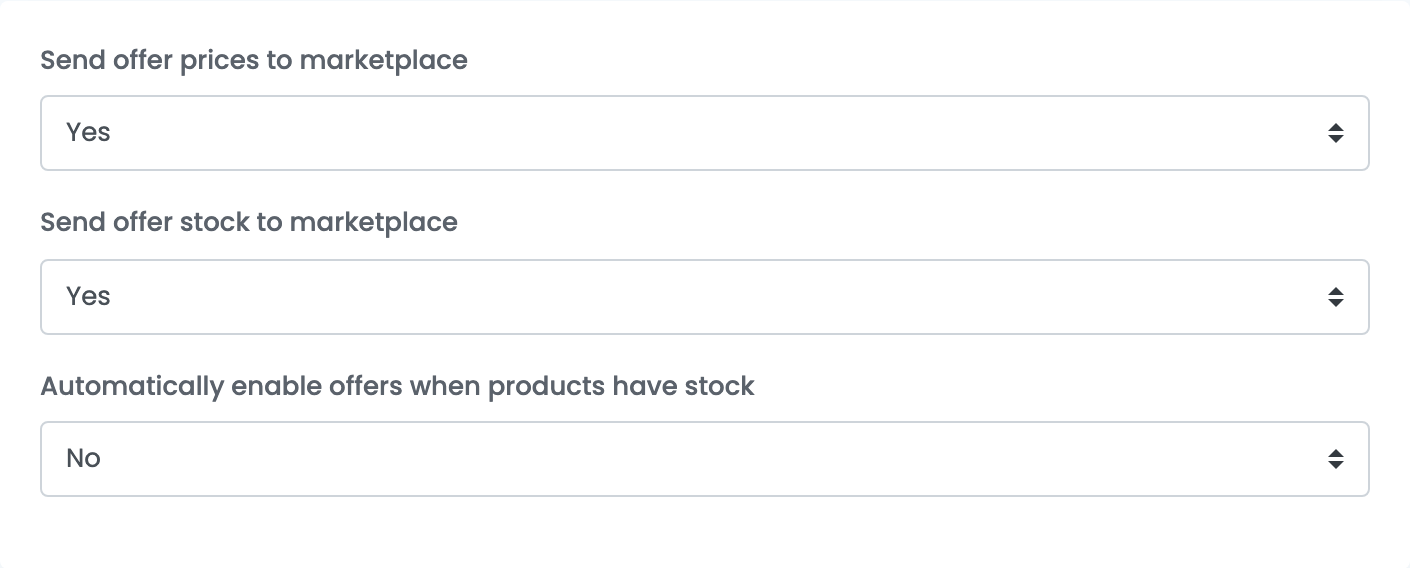
| Setting | What happens when it is on |
|---|---|
| Send offer prices to marketplace | A price change in easySales is pushed to Decathlon. Turn it off if you set prices on Decathlon itself. |
| Send offer stock to marketplace | A stock change in easySales is pushed to Decathlon. Turn it off if the stock on Decathlon is managed elsewhere. |
| Automatically enable offers when products have stock | An offer that ran out of stock is put back on sale by itself when stock arrives, instead of waiting for you. |
Sending your first offers
Once the connection is saved, go to Online / Virtual Shop → Products, filter to the products without an offer on Decathlon, and use Add offer to Decathlon. Filtering first is what stops you creating a second offer for a product that already has one.
If your shop was already selling on Decathlon before you connected it, those offers are pulled in on their own and appear under Marketplace → Offers on the Decathlon tab.
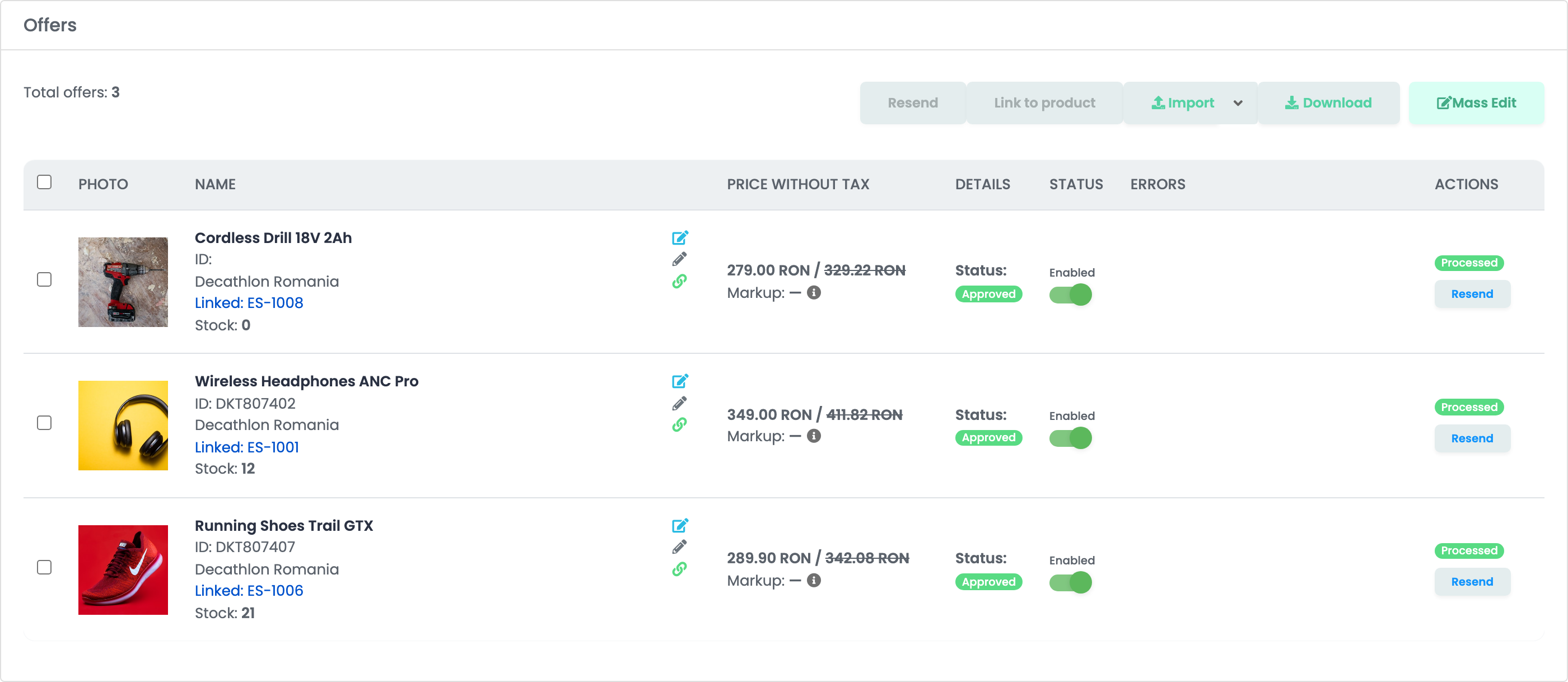
Product safety information is part of the offer
Decathlon asks for the General Product Safety Regulation details on every offer, and easySales carries them on the offer itself rather than on the product. Open any Decathlon offer and the block is there.
| Field | What goes in it |
|---|---|
| Manufacturer name | Who made the product, or the responsible person inside the European Union if the maker is outside it. |
| Manufacturer e-mail and postal address | How a buyer or an authority reaches them. |
| Trademark | The brand the product is sold under. |
| Safety information | The warnings and instructions that have to travel with the product. |
| Warnings | Pick from the standard hazard statements. Leave it empty for a product that carries none. |
| Safety document | Upload the declaration or instruction sheet when the product needs one. |
VAT on company orders
There is nothing to switch on for this. Whenever a Decathlon order arrives from a company that has a VAT number, easySales checks that number against VIES by itself and records the answer on the order. What your invoice then does with that answer is decided on your invoicing connection, not here.