How to connect Temu with easySales: a complete integration guide
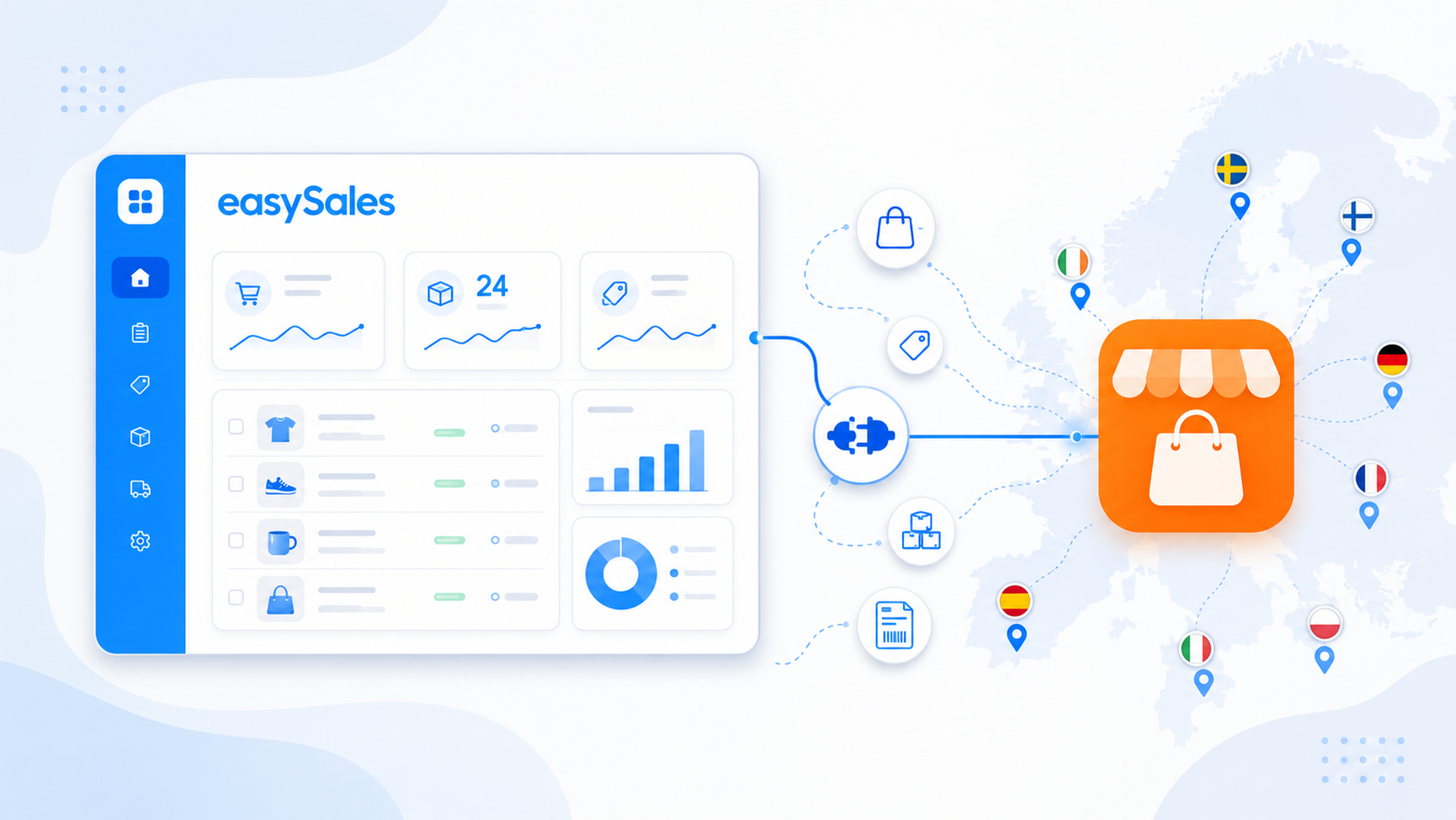
Connect your Temu seller account with easySales using a single access token — authorize the easySales app in Temu Seller Central, copy the token, open the connect form in easySales, then paste it and complete your account settings. Centralize Temu orders across your European marketplaces, generate invoices, buy shipping labels, and publish your catalog as offers with stock and prices kept in sync.
Why connect Temu with easySales
Selling on Temu and want one place to manage orders, generate invoices, and keep your listings in sync? easySales brings your Temu marketplaces into a single dashboard alongside the rest of your sales channels.
Once connected, Temu orders flow into easySales so you can invoice them, process them with automation flows, buy shipping labels, and track their fulfillment. Your catalog goes the other way: easySales publishes your products as Temu offers and keeps their stock and prices updated, so you maintain one catalog instead of editing each listing by hand.
You connect with a single access token from your Temu account — no plugin to install, no IP whitelisting. The sections below walk you through authorizing easySales in Temu, copying the token, and pasting it into the connect form.
How the Temu connector works
easySales talks to Temu through Temu's Open API. Instead of an API key and secret you manage yourself, you authorize the easySales app inside Temu Seller Central; Temu issues an access token for that authorization, and that single token is what you paste into easySales. The token is tied to the Temu account and region you authorized, and it can expire or be revoked — so if syncing ever stops, re-authorizing in Temu and pasting a fresh token is the fix.
It helps to understand the split before you start:
- Orders come in. easySales imports your new and updated Temu orders so they land in your Orders screen ready for invoicing, shipping, and flows. Your existing Temu listings are read in too, so you can link them to your catalog.
- Offers, stock, and prices go out — once offers are linked. easySales is the source of truth for your listings, but syncing is not automatic the moment you connect: each Temu offer must be linked to a product in your easySales catalog before it publishes and updates. After that, easySales pushes the offer and keeps its stock and price updated on a recurring schedule.
Prerequisites — what to prepare before you start
A few requirements keep the connection from failing at the first sync.
An active Temu seller account
You need a live Temu seller account with a store in the country you want to connect.
The easySales app authorized in Temu
In Temu Seller Central (Apps & Services / App Store) find easySales, authorize it, grant its permissions, and copy the access token Temu generates. You paste that token into easySales.
An invoice series ready
A billing series that matches your invoicing software, so imported Temu orders are numbered correctly from the start.
Weight and compliance data prepared
Temu requires each offer to carry a weight and its EU compliance details (Manufacturer and Responsible person), and rejects offers missing them. Prepare these before publishing.
Step 1 — Authorize easySales in Temu and copy your access token
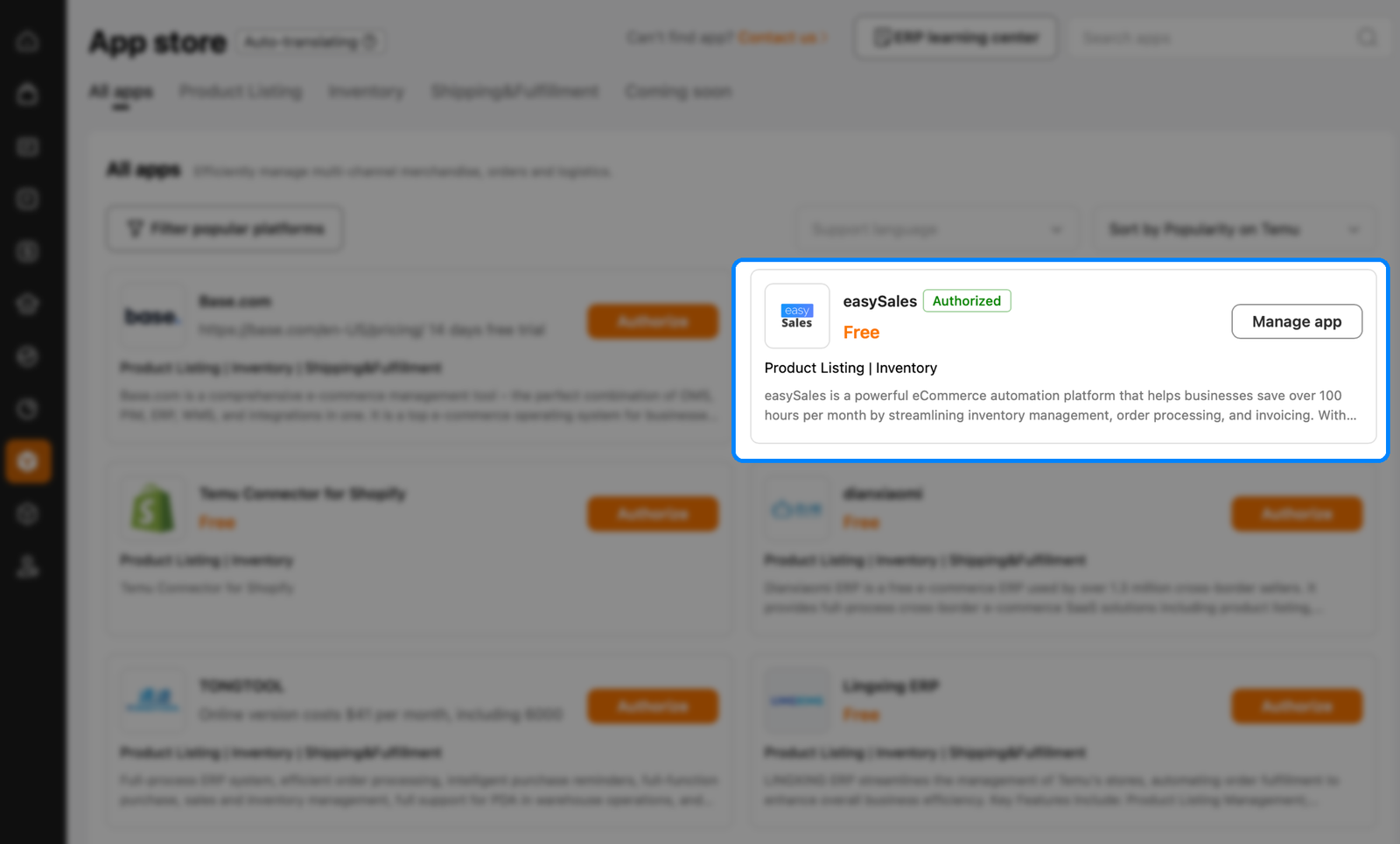
Start on the Temu side. Sign in to Temu Seller Central and open Apps and services → App Store. Find the easySales app and click Authorize. (If you authorized easySales before, it appears as Authorized with a Manage app button instead.)
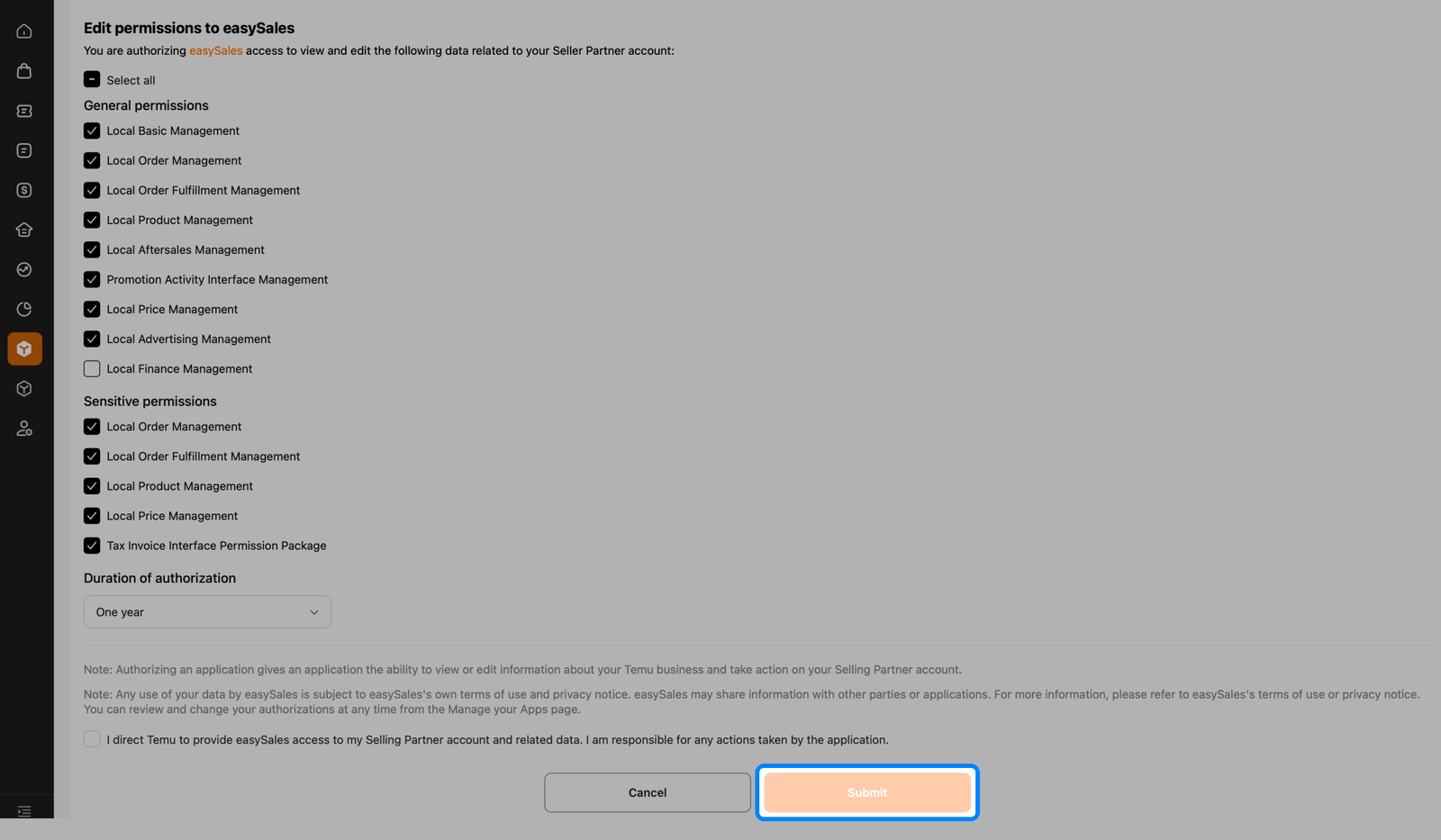
On the Edit permissions to easySales screen, grant the permissions easySales needs, choose the Duration of authorization, tick the confirmation box, and click Submit.
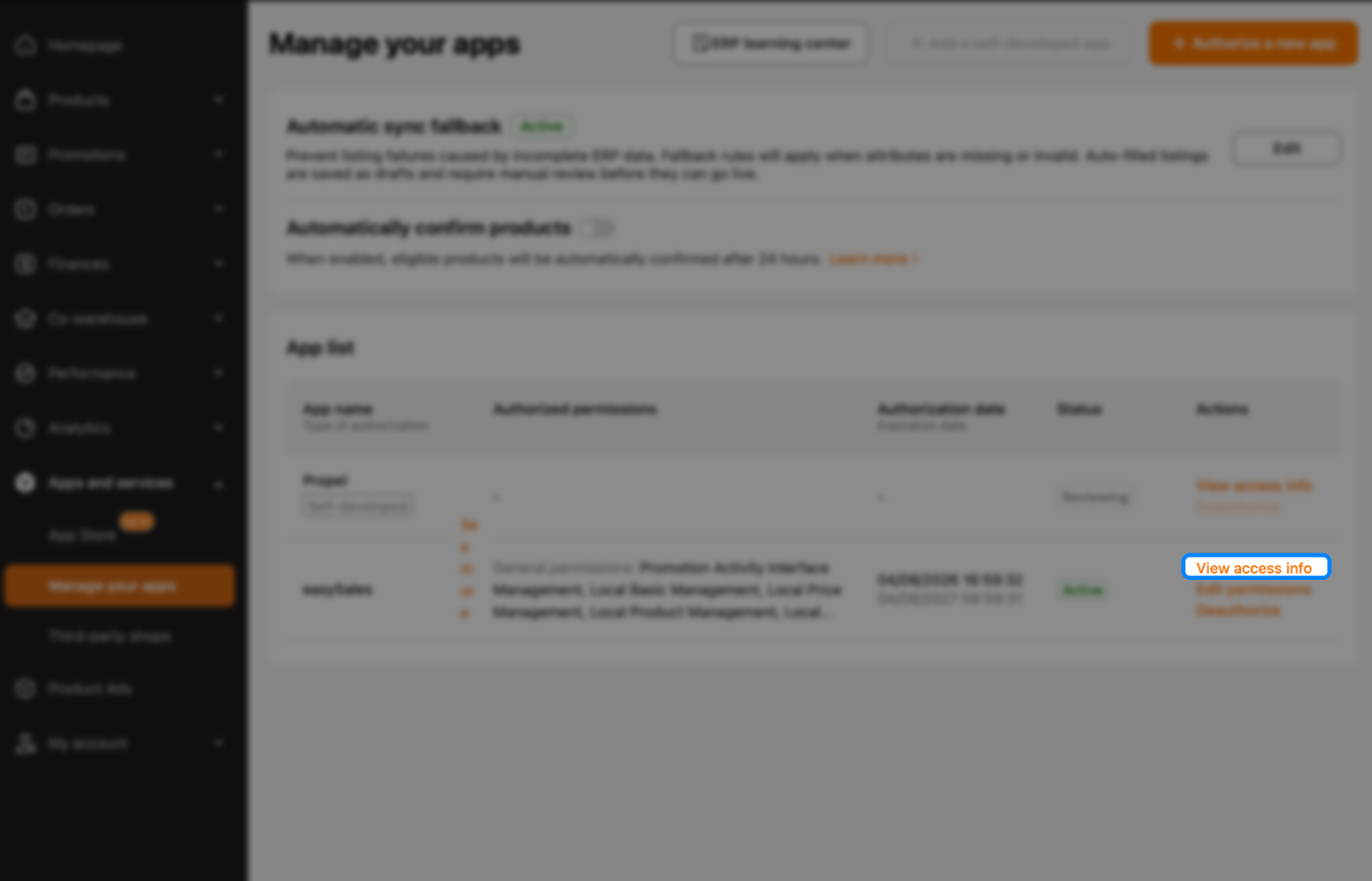
Back under Apps and services → Manage your apps, easySales now shows as Active. Open its View access info action to reveal the access token and copy it — you'll paste it into easySales in Step 3.
Step 2 — Open the connect form in easySales
In easySales, go to Integrations → Marketplaces. Each Temu country has its own card. Find the Temu card for the country you're connecting and click Connect on it.
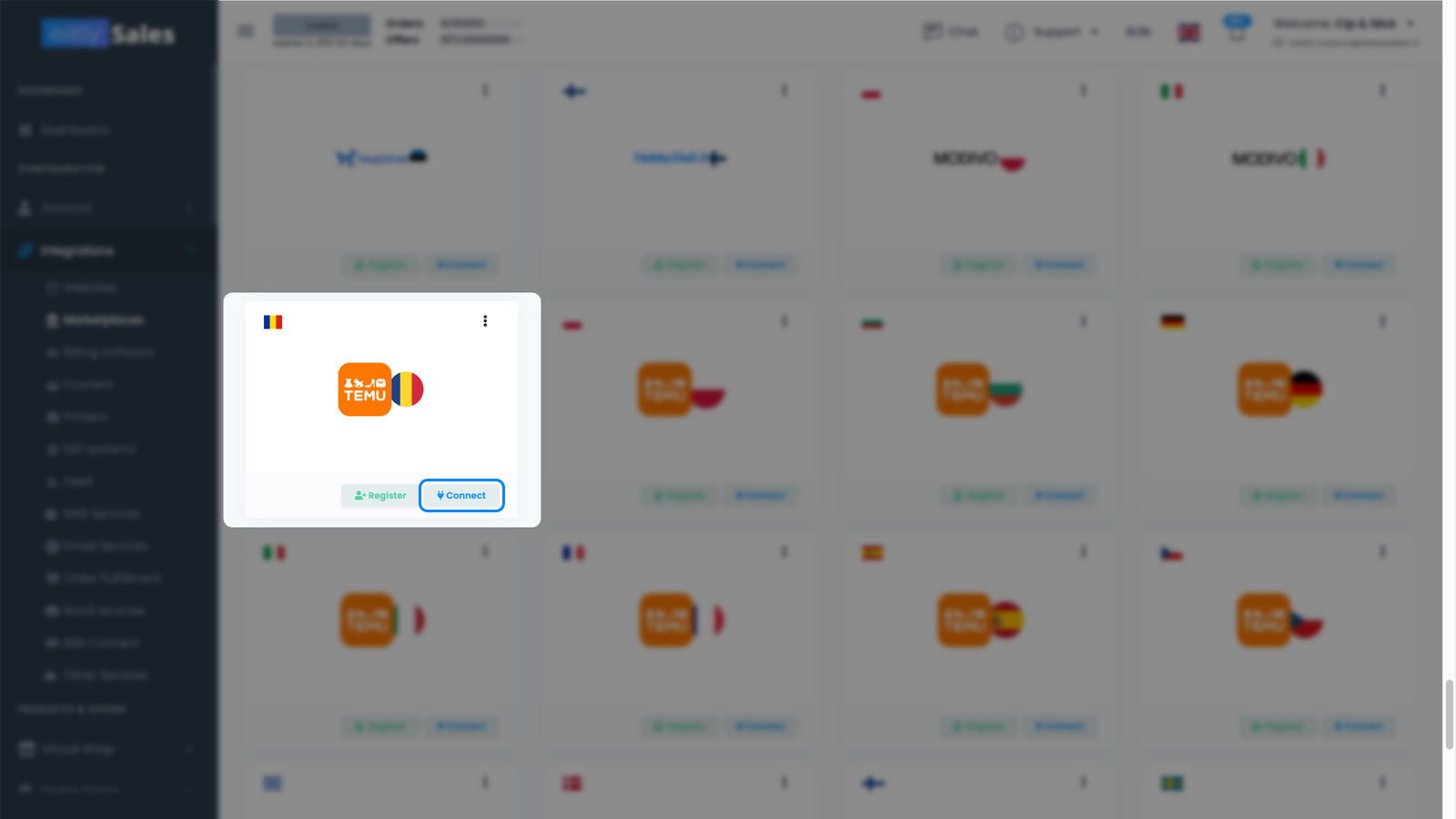
The Temu settings form opens with two tabs: Main settings (the access token and core configuration) and Additional settings (sync behavior). You'll work in Main settings first.
Step 3 — Paste your token and complete the settings
On the Main settings tab, start with the two fields easySales needs to reach your account:
- Connection Name — a label you choose (for example "Temu RO"). Only visible inside easySales, handy when you run several Temu connections.
- New order custom status — optional; assigns a custom status to imported Temu orders if you use custom order statuses in easySales.
- Access token — the token you copied from Temu Seller Central. Required.
Click Continue. easySales makes a live call to Temu to validate the token; when it succeeds, it loads your account's shipping templates and tax options and reveals the rest of the form.
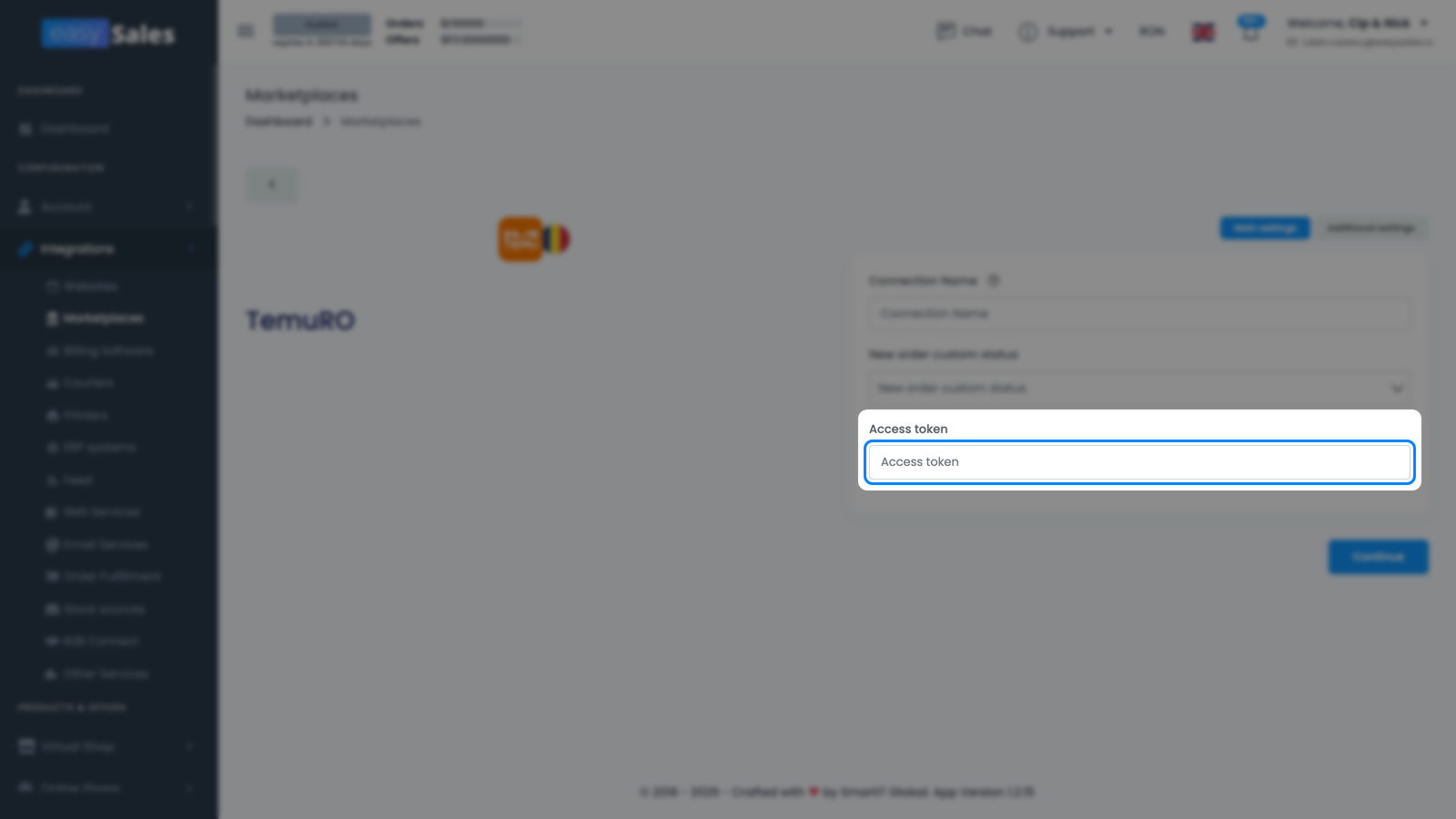
Now complete the account configuration:
- Invoice Series — the default billing series imported Temu orders are assigned, matching the series you use in your invoicing software. You can change it per order.
- Price Addition — an optional percentage added on top of your product price when publishing new offers to Temu.
- Default shipping tax — the default shipping VAT rate set on the connection.
- Default Tax Rate — the default tax code applied to your offers and orders.
- Default shipping template — the Temu shipping template used for your offers, loaded from your Temu account.
- Default fulfillment type — who fulfills the order: Self Delivery (you ship) or Platform Delivery (Temu handles fulfillment).
- Delivery Days — the handling time published with your offers.
Click Save to finish.
What happens automatically after you save
Once the connection is saved, easySales sets up the integration without any further action from you.
- An initial synchronization is scheduled — easySales begins importing your recent Temu orders so you have something to work with right away.
- New Temu orders arrive in your Orders screen from then on, ready for invoices, shipping, and automation flows.
- Your existing Temu listings are imported into Marketplaces → Offers (the Temu tab) — but they are not synced yet. Each imported offer has to be linked to the matching product in your easySales catalog first; only linked offers send stock, price, and content updates to Temu.
Orders flow in on their own; getting your listings onto Temu is a deliberate second step, covered in Getting your catalog onto Temu below.
| From Temu → easySales | From easySales → Temu |
|---|---|
| Orders (new and updated) | Offers / listings (with images and specifications) |
| Your existing Temu listings (imported to link) | Stock levels |
| Offer status, rejection reasons, and traffic tags | Prices |
| — | Shipping labels (via Temu Buy Shipping) |
| — | Tracking numbers and shipment confirmation |
Temu across Europe — connect each country once
Temu runs across many European marketplaces — Romania, Poland, Bulgaria, Hungary, Germany, and more. The connection procedure is identical for each, and easySales handles the per-country differences once you pick the right card:
- The marketplace endpoint follows the country you select.
- The currency follows the country.
- The available VAT rates follow each country's tax rules.
- Because the access token is tied to the Temu account and region you authorized, connect each country from its own card using the access token for that Temu account.
Getting your catalog onto Temu
To publish products as Temu offers, a few things have to be in place. First, link each offer to the matching product in your easySales catalog — only linked offers sync. Second, map your categories to Temu's and fill the required attributes: Temu validates category attributes strictly, and offers with an attribute placed at the wrong level or missing a required value are rejected until corrected.
Temu also has hard content requirements. Every offer needs a weight, and EU product-safety rules mean each offer must carry its Manufacturer and Responsible person details — Temu rejects offers that are missing them. Set these in bulk via mass edit or Excel import before publishing.
Fine-tuning your Temu connection
The Additional settings tab controls how easySales syncs with Temu after the connection is live.
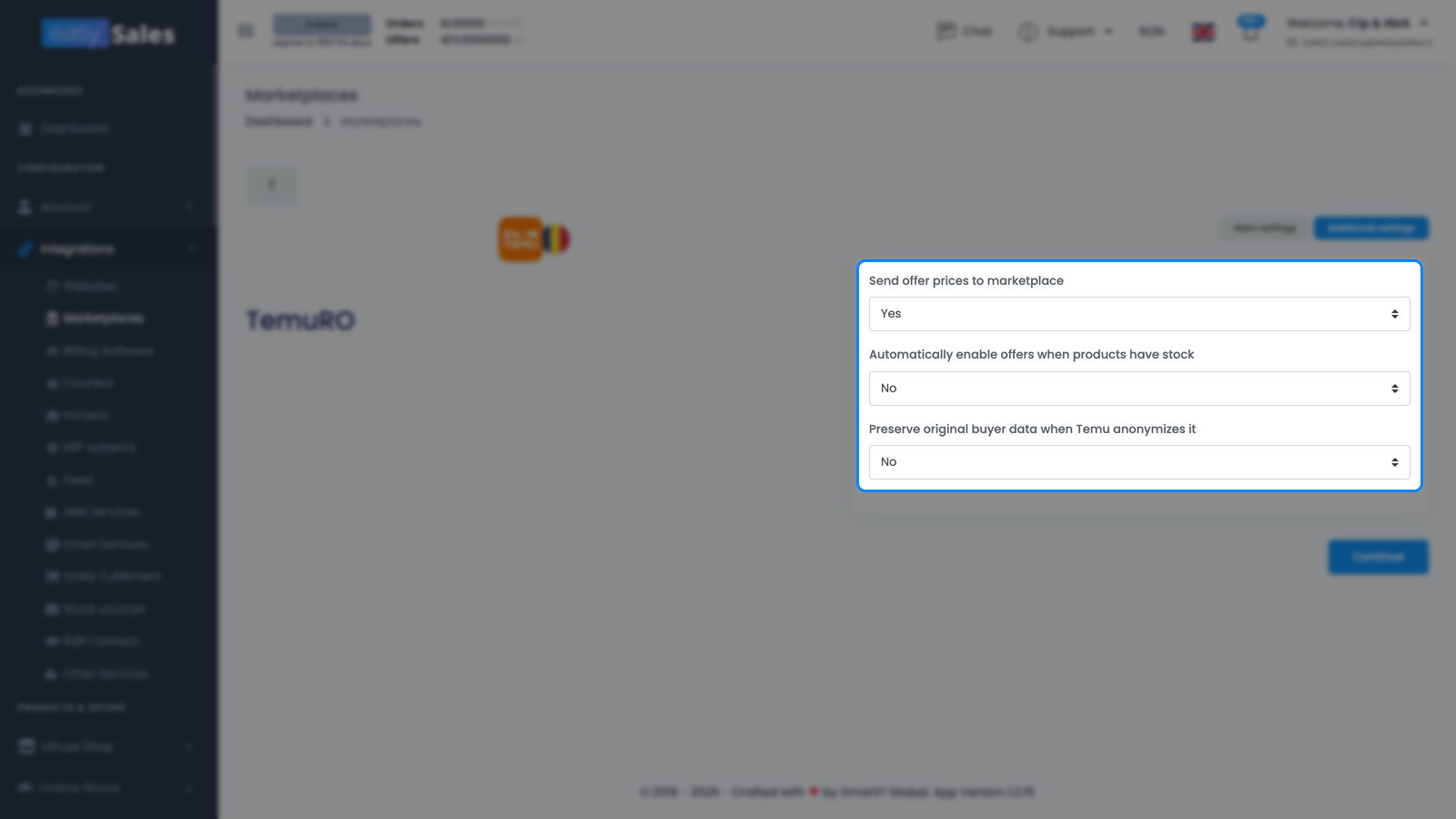
- Send offer prices to marketplace — push price changes from easySales to your Temu offers. Turn off if you manage prices directly in Temu.
- Automatically enable offers when products have stock — reactivate an offer automatically once its product is back in stock above zero.
- Preserve original buyer data when Temu anonymizes it — keep the original buyer details on the order after Temu anonymizes them.
You're connected — what's next
With orders arriving, the next step is automation: set up flows to generate invoices and process orders as they come in. easySales also supports Temu Buy Shipping, so you can buy shipping labels for your Temu orders through Temu's integrated carriers.
To get your catalog onto Temu, add weights and compliance details, map your categories, link your offers, and let easySales publish and maintain them. After your first batch of offers, keep an eye on the Errors column on the Offers page (Marketplaces → Offers, Temu tab) and reach out to support if anything looks off.
Connect your Temu account in minutes
Try easySales free for 14 days. No plugin, no credit card, no code.